The LCOsupply
1.5 lakh local cable operators run wires through every Indian neighbourhood. They have the access. They have the trust. They were waiting for someone to give them more than TV.
India has 1 billion internet users. Yet 85 out of 100 Indian homes still have no Wi-Fi. 4G reaches them. Broadband Wi-Fi doesn't. They pay 100× for mobile data they shouldn't have to.
For ₹19,899, you buy one Wi-Fi hotspot in India. Not for your home. For a kirana shop, a classroom, a neighbourhood that needs one. Dabba installs and runs it. Locals pay to use it. You earn rewards for 7 years, renewable.

From Punjab to Tamil Nadu, Bengal to Gujarat. Every Indian language has its own word for “the box that holds something precious.” It is the same word. Spoken in the script of your home.
Your grandmother kept her gold in a dabba.
Her grandmother kept letters in one.
Now Dabba holds something just as precious. India's internet.
A grandmother in Patna burns through her monthly data pack trying to make one video call to her son. A 12-year-old in Latur opens her coaching video, watches it buffer, watches her data vanish. A kirana owner in Shillong loses a ₹2,000 UPI sale because the signal dropped at the wrong second.
24 crore Indian households live this way. Not because they don't have a SIM card. Because they don't have Wi-Fi.
The towers reach them. The fibre doesn't. Mobile data costs them 100× what a fixed broadband subscriber pays per gigabyte. The economics, for any telco at scale, simply don't work in a lane of Cuttack or a panchayat in Banswara.
But the wires are already there. 1.5 lakh local cable operators run them through every neighbourhood in India. They have the access. They have the trust. They've been waiting for someone to give them the tools. Dabba did.
₹19,899. You get a digital ownership certificate for one hotspot, issued on Solana, held in your wallet.
A verified local cable operator installs the hotspot where demand is real. A home, a shop, a classroom. You never touch the hardware.
Rewards flow to your certificate automatically as people use the network. Track every rupee in the Dabba app.
Digital India is not just a programme. It is a way of life. The benefits of technology must reach every Indian, every village, every home.
Attributed to Hon'ble Prime Minister of India, on the launch of PM-WANI · 2020
Photo: A Dabba hotspot live in India — what PM-WANI made possible.
In December 2020, the Union Cabinet approved PM-WANI (Prime Minister's WiFi Access Network Interface). A public WiFi framework designed to bring a billion Indians online without waiting for telecom giants.
The vision was simple. Every kirana shop, every tea stall, every panchayat office could become a WiFi access point. Run by locals. Owned by Indians. Regulated by the Government of India.
Six years on, Dabba is the country's largest implementer of PM-WANI. By a margin most policymakers didn't think was possible.
When you buy a Dabba hotspot, you're not backing a private company. You're contributing to a national mission, in the way the framework was designed to be funded. By Indians, for India.
A telco builds a tower and waits. A marketplace coordinates the people who already have what the network needs. Four roles. One flywheel. Each part feeds the next.
1.5 lakh local cable operators run wires through every Indian neighbourhood. They have the access. They have the trust. They were waiting for someone to give them more than TV.
Ten years of building. Hardware designed for Indian power and Indian weather. Software for billing, KYC, PM-WANI compliance. We don't compete with LCOs. We equip them.
You. And tens of thousands like you. Each ₹19,899 funds one specific hotspot. One owner, one hotspot. The network reaches the neighbourhood in Cuttack and the panchayat in Banswara one owner at a time.
A 12-year-old in Latur. A grandmother in Patna. A kirana owner in Shillong. They have a SIM card and a real need: cheap, reliable, neighbourhood Wi-Fi that isn't capped at 1.5 GB a day.
The flywheel only spins one way. Each turn brings down the cost of bringing the next neighbourhood online.
Not to subsidise broadband. Not to wait for a telecom giant to figure it out. To empower the local cable operator who already knows your neighbourhood better than any telco engineer ever will.
An LCO who used to make a thin margin on cable TV now adds a meaningful new monthly revenue line. They hire an installer. They train a teenager from the neighbourhood for support. One hotspot becomes ten. Ten becomes fifty. Cable wallah becomes Wi-Fi wallah becomes small business owner.
A revenue line becomes a livelihood. A livelihood becomes a family that sends its child to a real coaching class. The line item that doesn't fit on a balance sheet, but is the part that matters most.
25 cities, 4 states. Up from 1,000 just 18 months ago.
Real households streaming 1,184 TB every day. Q1 2026.
From paying subscribers. Not speculation.
Across 70+ countries. India's turn now.
Commercial-grade, maintained by 75+ LCO partners.
TRAI Chairman, 2026. The gap is the opportunity.
Every wave of Indian infrastructure rewarded the ones who built it early. Not the ones who waited for proof.
The first Indian to industrialise steel did it before Independence. Today, every flyover, every Vande Bharat, every nail in your home traces back to that bet.
The mid-cap promoters who survived the licence raj and bet on '92 became the wealth-creation stories of the next two decades. Twenty years of compounding starts at moment zero.
When data pricing collapsed from ₹150/GB to ₹10/GB, 50 crore Indians came online overnight. The shareholders who held through that launch are the wealth-creation story of the decade.
The next 24 crore Indian homes will not get Wi-Fi from a tower. They'll get it from a hotspot in their neighbourhood. The owners of those hotspots are who you become for ₹19,899.
This isn't a bet on a token. It's a bet on the same India that built UPI, that put a rover on the moon, that made vaccines for half the world.
The grandfathers and grandmothers who got rich after 1991 didn't have ten reasons. They had one. They believed in India before everyone else did. Your turn.
A first-time owner buys one. A serious operator builds a fleet. Each certificate is independent. Different LCO, different city, different deployment date.
The natural starting point. One hotspot, one neighbourhood, one piece of India online. Most owners begin here.
Buy one →For families building a small portfolio across cities. Each hotspot deployed by a different LCO, diversified by geography and demand.
Buy five →For Indians who want to back the network the way Indians once backed mutual funds. Early, with conviction. Concierge onboarding, named account manager.
Buy ten →For HNIs, family offices, and businesses who want a meaningful position in India's broadband layer. Choose your states. Choose your LCOs. Build with us.
Talk to founders →Bulk pricing reflects shared deployment costs. Each certificate remains an independent on-chain asset, individually transferable. Rewards depend on usage, location, and network growth. No guaranteed returns.
A digital certificate of ownership for one commercial-grade WiFi hotspot in India. One-time purchase. No subscriptions. No hardware to manage.
A Dabba hotspot purchase is a digital ownership certificate representing one hotspot on the network. Rewards depend on usage, location, and network growth. No guaranteed returns.
Backed by

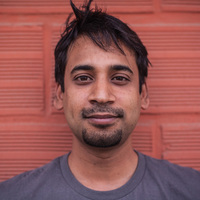
Y Combinator alum. Previously ran the internet & mobile fund at CIIE, IIM Ahmedabad. Leads Dabba's engineering and network architecture.

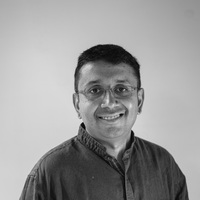
Y Combinator alum. 15+ years in telecom product. Ex-Mahindra British Telecom. Works directly with TRAI and DoT on India's PM-WANI policy.
The grandfathers who got rich after 1991 had one thing in common. They believed in India before everyone else did. The Indians who got online after Jio had one thing in common. They used what someone else built. You don't have to choose between those two stories. Buy one Dabba hotspot, and you're in both.
Buy a hotspot · ₹19,899 →When India came online, you were the reason.